
How-to: Customer Journey Analysis with Re-ID in Retail
Customer journey analysis with Re-ID provides the retail industry with precise data on footfall, customer behavior, and space utilization. Based on these insights, retailers can make smart decisions for both marketing and operations.
Published
May 12, 2026
.png)
Understanding brick-and-mortar retail like an online shop
While online shops track every click, brick-and-mortar retail often remains a "black box." Retailers ask themselves: "Which areas are particularly interesting to customers? Where are the dead zones? Does a conversation with a sales assistant trigger a purchase?" To optimize the shopping experience and use space more efficiently, retailers need to understand how their customers truly navigate the store. Re-ID makes journeys visible within the video streams of existing security cameras.
Why is Re-ID suitable for customer journey analysis?
With Re-ID, all important touchpoints in a retail store can be mapped realistically for individual customers using video data from security cameras. At the same time, the acquisition costs for video analysis software with Re-ID technology are manageable. By automatically excluding staff based on their longer dwell times, Re-ID provides a clean database for further analysis.
Complex journeys
In the majority of retail stores, footfall is measured at entrances and exits using cameras, sensors, or other technologies. However, this is usually not enough to capture the complexity of a store visit. Someone who enters doesn't automatically buy. Insights into what exactly contributed to a purchase decision are primarily provided by the touchpoints between entering and leaving the store. These results provide marketing and operations teams with the levers needed to further improve the on-site customer experience.
High accuracy
Conventional people counting without Re-ID is also frequently inaccurate. A person may be counted twice as soon as they move through multiple cameras, or individuals in groups may not be clearly distinguished from one another. Re-ID reliably recognizes the same person across different cameras as one and the same individual based on anonymous features. The accuracy of the data is further enhanced by the fact that employees are automatically excluded from the count. This factor is hrelevant especially for retailers with a large number of sales staff on the floor. Subsequent store KPIs, such as conversion rates or customer engagement, are also recorded more precisely.
Privacy protection
A clear distinction must be made regarding Re-ID and data protection. Re-ID is not facial recognition. Re-ID is based on the recognition of anonymous metadata, such as a person's clothing and items they are carrying. This is the reason why this recognition technology can be used in compliance with GDPR even in sensitive areas like retail stores. At Isarsoft, data protection and information security are core functions of our software. Learn more about data privacy.
Existing camera infrastructure
Re-ID utilizes data from existing security cameras. For retailers, this means a manageable investment, as in many cases no new hardware is required—only the video analysis software needs to be purchased.
How does marketing benefit from journey analysis with Re-ID?
Footfall counting
Accurate customer numbers form the basis for analysis in retail marketing and performance comparisons between branches.
- Accurate customer counting:
Re-ID reduces double counting and gaps in counting, providing precise visitor numbers by recognizing and counting each visitor only once. - Passers-by vs. visitors:
Distinguishing between passers-by who only look through the window and people who actually enter the store is possible through the precise measurement of dwell times.
Visualization of customer journeys
Based on the visualization of customer journeys, retail marketing teams can place products strategically and guide customers purposefully through the sales areas.
- Touchpoint analysis:
Re-ID recognizes individuals across different camera boundaries as the same person. This allows the most important touchpoints from the entrance to the checkout to be visualized as a trajectory. - Hotspot identification:
Heatmaps reveal zones that are highly frequented by customers and lead to purchases. - Detection of dead zones:
Heatmaps also show which areas in the store customers tend to avoid or overlook.
Interaction and dwell time
Interaction data and dwell time analysis provide insights into the performance of marketing campaigns, allowing them to be specifically optimized.
- Marketing performance:
Video analysis with Re-ID detects what percentage of customers stop in front of a display and how long they stay there. - A/B testing for in-store mnarketing:
Retailers can make the success of window displays or promotional areas measurable using dwell time analysis and activation rates. - Purchase abandonment:
Journey analysis also means understanding why customers leave the store without a purchase and identifying the point where interest is lost.
Target group segmentation
In addition to customer databases and loyalty systems, Re-ID provides valuable, realistic insights into who is actually shopping in the store.
- Group size:
Individuals show different search and purchasing behavior than families or couples. Re-ID categorizes visitors into group sizes. - Age and gender:
Re-ID assigns customers to age and gender segments anonymously and reliably. Marketing teams can thus recognize age- and gender-specific behaviors. - Behavior-based target groups:
Customers behave differently depending on whether they are just browsing or have a specific purchase intent. Re-ID recognizes different behavioral patterns based on dwell times, paths, and engagement.
How does operations benefit from journey analysis with Re-ID?
Queue management
Long lines at checkouts lead to customer frustration but can easily be avoided with video analytics.
- Demand-oriented staffing:
The system provides real-time data on occupancy and queues. Staff can be called to checkouts or fitting rooms exactly when the actual customer load increases. - Early warning system:
By tracking customer journeys, the software recognizes when several customers move toward the checkout simultaneously, allowing new registers to be opened ad hoc before long lines form.
Optimization of personnel planning
Meaningful staff scheduling requires experience and manual effort. Data-based automation simplifies the process.
- Exclusion of staff:
Conventional technologies often count employees, which distorts the data basis for personnel planning. Re-ID recognizes staff without the need for tags or lanyards and automatically filters them out of the statistics based on their long dwell time in the store. - Efficient shift planning:
Instead of rigid schedules, staff planning can be adapted to actual, historically proven visitor frequencies. - Relief through automation:
Video analysis handles the monitoring of sales areas automatically. Staff no longer need to monitor screens manually but are alerted only in the event of anomalies or critical occupancy levels.
Improvement of space utilization
Sales space is expensive, and its efficient use is decisive for business success. Re-ID helps uncover potential.
- Identification of bnottlenecks:
Store managers see exactly where aisles become congested, where lines form, or where dead zones occur. - Data-based remodeling:
Insights from heatmaps and trajectories serve as an objective basis for decision-making regarding structural changes or improved wayfinding.
Cost efficiency
The investment required for video analytics with Re-ID is manageable compared to other journey analysis technologies.
- Investment costs:
Isarsoft Perception uses existing security camera systems. Expensive new hardware purchases or specialized 3D sensors are often unnecessary. - Low infrastructure costs:
The pure software solution can be easily integrated into existing Video Management Systems (VMS), saving significant installation costs.
Practical example: Re-ID in food retail
In a modern supermarket, journey analysis with Re-ID could look like this: A food retailer nows exactly how many customers enter the store in the morning and how high the revenue is in the evening—but why revenues in the newly designed "regional specialties" corner fall short of expectations, while lines form at the checkouts despite sufficient staff planning, remains a mystery.
This is where conventional footfall measurement reaches its limits. However, with Re-ID, solutions for these operational and strategic problems can be developed. Using the video data in Isarsoft Perception, the marketing team discovers that a laboriously placed promotional area for regional specialties is hardly noticed. The dwell time is low. A majority of customers instinctively turn left after the produce section to go directly to the dairy products. The promotional area on the right is in a "dead zone." By visualizing these paths, marketing realizes the problem isn't the assortment but the wayfinding. Small adjustments to shelf placement or targeted floor markings can now guide the customer flow. Success can be measured immediately through increased interaction rates and dwell times in that area.
Despite footfall measurements at the entrance, unpredictable waiting times at the checkouts occur regularly. While staff are stocking shelves and moving through the store, checkouts aren't opened in time, and long lines form. Customers are annoyed, and some even leave the store, abandoning their purchases. Isarsoft Perception can alert store managers in time when several customers approach the checkout area to pay. False alarms are reduced when an employee moves toward the checkout because Re-ID can distinguish between customers and staff. If the operations team also incorporates trends from frequency and occupancy into their decisions, Isarsoft can predict that additional checkout staff will be necessary on a Saturday between 10 AM and 12 PM.
Conclusion: Measurable success with Re-ID instead of gut feeling
Video Analytics with Re-ID provides retailers with valuable data on journeys, footfall, customer behavior, and statistics. Marketing decisions and process adjustments in daily operations can thus be made based on data, and feedback can be collected immediately for further optimization. With Re-ID, grocery retailers, fashion chains, banks, drugstores, pharmacies, and kiosks not only know how many customers are in their stores but also how they experience them.
Furthermore, journey analysis with Re-ID is the key to maintaining brick-and-mortar spaces in competition with online retail. With video analysis, retailers finally obtain measurable results similar to those of online shops. For retail marketing teams, this means real in-store A/B testing and targeted customer communication. Does the display with the blue banner work better than the one with the red banner for the new organic vegetable range? Re-ID provides the answer through a direct comparison of dwell times. It also indicates that young individuals shopping after work are particularly interested in the display. Linked with digital marketing, this means tuning online campaigns or newsletter content precisely to these "offline insights." The result is a consistent customer journey based on real behavioral data instead of assumptions.
Become a pioneer in brick-and-mortar retail by transforming your existing camera infrastructure into an intelligent data source that benefits both marketing and operations.
Discover the possibilities of customer journey analysis with Isarsoft Perception now.
Explore More Publications
.png)
What is Re-ID? Multi-Camera-Tracking in People Counting
Person Re-Identification, or Re-ID for short, is a computer vision technology that uniquely identifies individuals across different, non-overlapping camera fields of view. While traditional people counting often reaches its limits when individuals leave one camera's field of vision and reappear in another, Re-ID solves the problem of double counting.
.png)
Transforming Public Transport: Isarsoft at InnoTrans 2026
Isarsoft is excited to announce our participation in the InnoTrans 2026, the international trade fair for transport technology. Join us in Berlin in September to explore how intelligent video analytics can revolutionize passenger counting in vehicles and stations.
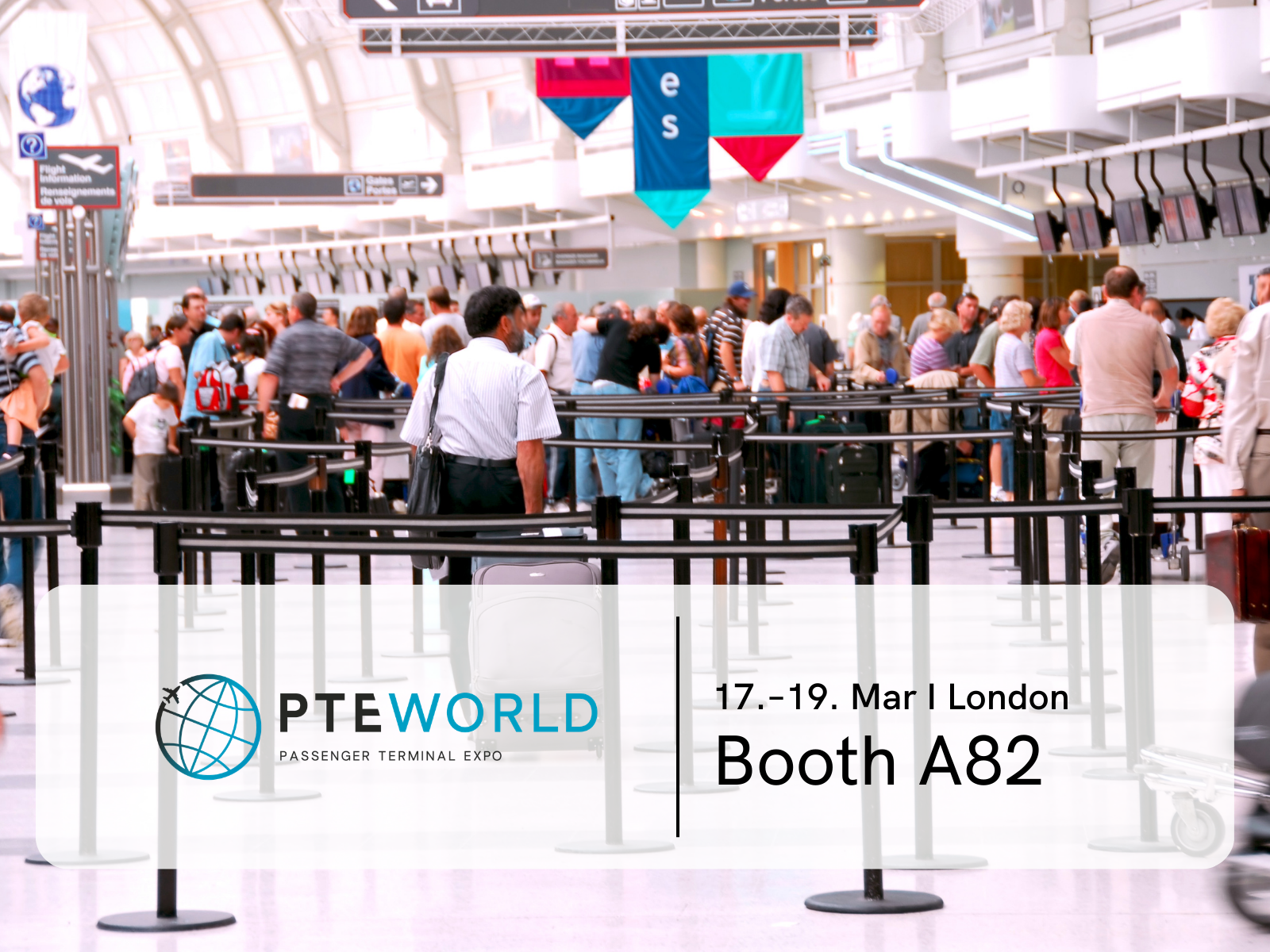
Join Isarsoft at the PTE World 2026 in London
Isarsoft is excited to announce our participation in the PTE World 2026, the world’s leading international airport trade fair. Join us in London this March to explore how intelligent video analytics can revolutionize security and passenger flow at airports.