
Artwork Protection at Kunstmuseum Stuttgart with Isarsoft
To protect priceless artworks without resorting to ropes, glass cases, or rigid sensor grids, Kunstmuseum Stuttgart implemented Isarsoft Perception's AI-powered video analytics software. By converting its existing security camera infrastructure into invisible, precision-tuned protection zones, the museum is able to automate artwork protection in real time.
Published
September 18, 2026
.png)
Challenge: Displaying art while protecting it
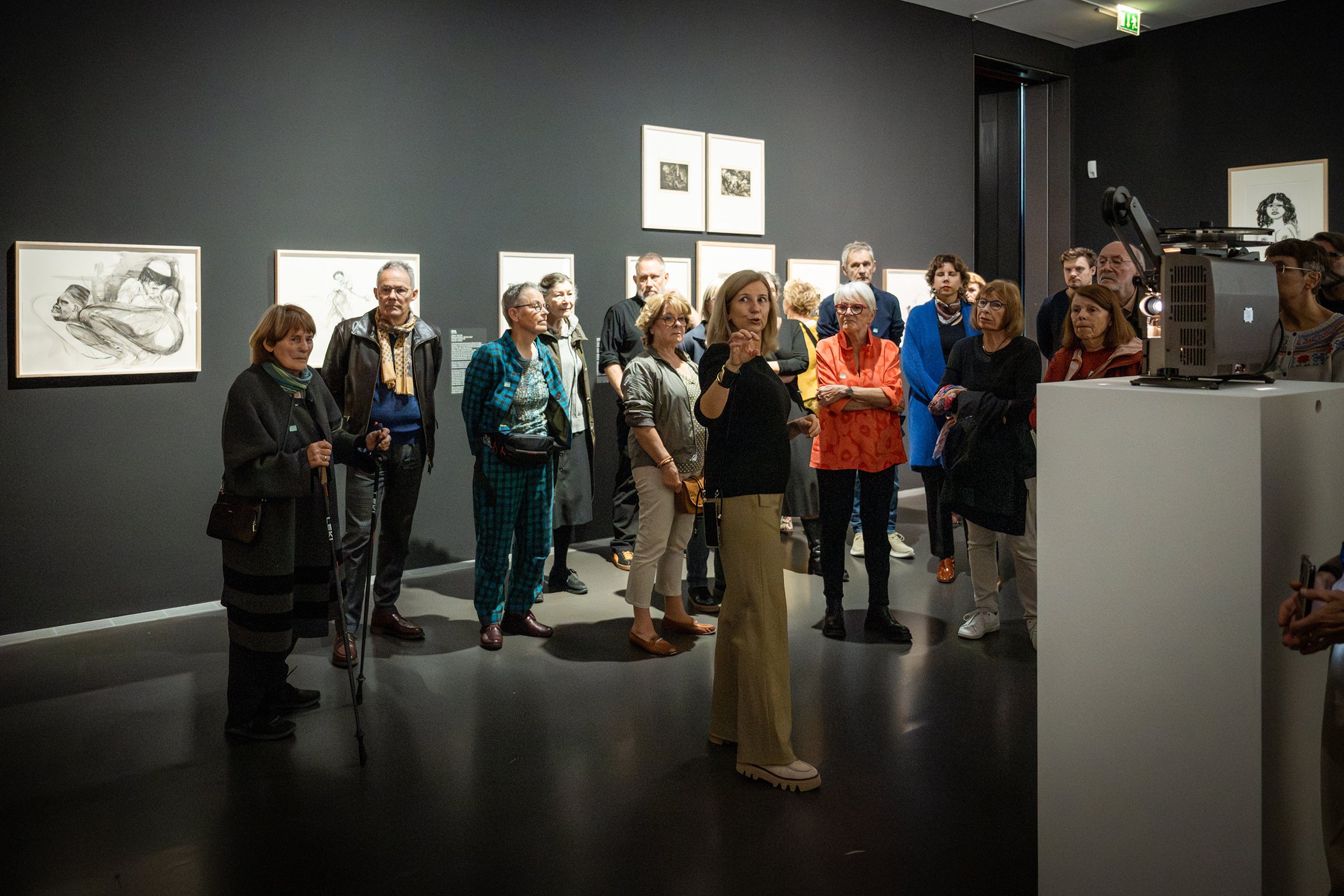
Making art open, transparent, and accessible to everyone is central to Kunstmuseum Stuttgart's mission. But barriers, cordons, and display cases work against that goal. They interrupt sightlines, alter the spatial experience of a room, and turn the museum from a living space for cultural exchange into something more clinical and closed off.
Yet without some form of protection, day-to-day museum operation regularly produces risky situations:
- Unintentional over-approach: Visitors lean in closer to paintings to study brushwork or fine detail, often without realizing how close they've gotten.
- Direct interaction: Children, or simply inattentive visitors, try to touch a canvas or sculpture to feel its texture.
- Reaction latency: Human security staff cannot watch every corner of every gallery at all times. By the time an incident is noticed, the reaction window has often already closed.
This is a challenge every museum, gallery, and cultural institution faces to some degree. The task at Kunstmuseum was to build a precise, contactless, and effectively invisible layer of monitoring.
Why exhibit protection matters more than ever
Artwork protection isn't a cosmetic concern. A single unauthorized touch to an unvarnished canvas, a fragile pastel, or a textured surface can trigger months of conservation work and in the worst cases, cause damage that is never fully reversible. As visitor numbers at major museums continue to grow, and as collections increasingly include contemporary, tactile, or unconventional media that don't fit neatly behind glass, the operational pressure on traditional exhibit protection methods keeps increasing.
Conventional approaches to exhibit protection
In many museums and galleries, manual surveillance by security staff - positioned directly in the gallery or watching camera feeds from a control room - remains the default. In practice, this creates several structural problems for operators:
- High staffing requirements:
Securing critical zones means posting staff rigidly at fixed positions. Covering an entire exhibition floor this way requires a large security workforce, driving up operating costs significantly. - False alarms: Traditional light barriers, laser-based systems, or fixed sensors are inflexible, expensive to install, and prone to triggering on ordinary foot traffic. Frequent false alarms desensitize security staff over time, leading to "alarm fatigue," where real threats risk being missed because staff have learned to discount the system.
- Risk to the artwork itself: Any physical contact with an exhibit can trigger extensive, costly conservation work and, in the worst case, cause permanent damage to irreplaceable pieces.
None of these approaches solve the underlying tension: protection at the cost of either the visitor experience, the budget, or both.
The solution: Exhibit protection with Isarsoft Perception
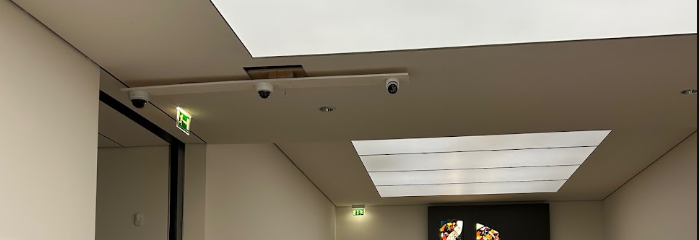
To protect valuable exhibits efficiently and invisibly, Kunstmuseum Stuttgart's technical department set out to find a reliable, automated alternative to manual and sensor-based surveillance. In a successful pilot project, Isarsoft demonstrated both the performance of its software and how seamlessly it integrated into the museum's existing infrastructure.
Across multiple test series, the software reliably detected approach and touch attempts on paintings and exhibits. This gives the museum an effective, visitor-invisible form of exhibit protection. As Isarsoft works with the museum's existing camera infrastructure, it does so without a major hardware investment or added strain on facility planning.
Implementation
Exhibit protection via video analytics becomes effective through three core mechanisms:
Virtual protection zones
Using Isarsoft Perception's interface, the team defined digital, invisible restricted zones directly over plus just a few centimeters in front of each painting.
Real-time precision with AI
Isarsoft's deep-learning algorithms distinguish precisely between a visitor moving normally through the room and a hand reaching deliberately toward a painting. This distinction is the difference between a system that's actually usable day-to-day and one that cries wolf so often that staff learn to ignore it.
Two-stage alarm logic
- Stage 1 — Warning: If a person crosses the invisible boundary, a subtle audio cue prompts them to step back.
- Stage 2 — Alarm: If someone reaches directly toward the artwork, an alarm — including a live image of the situation — is sent immediately to security staff.
Continuous project optimization and fine-tuning
Throughout the project, the Isarsoft team worked closely with Kunstmuseum Stuttgart's stakeholders to continuously refine the system. The goal was to maximize the detection rate for touch attempts specifically.
To get there, the system evolved from an initial, classic bounding-box model to a pose-based model that recognizes a person's skeletal structure. With this refinement, a touch attempt is now only flagged once a hand specifically approaches the artwork cutting down on triggers caused by a visitor simply standing or walking nearby.
Results
With the successful rollout of Isarsoft Perception, Kunstmuseum Stuttgart has established a precise, reliable safeguard for the preventive protection of its exhibits. For museum management, this translates into concrete operational relief and cost savings:
- Security staff relieved from monotonous static watch duty, allowing more flexible and effective deployment.
- Art stays the focus, protected by technology that works quietly in the background rather than visible barriers that compete with the exhibition itself.
Rudi Schweizer, responsible for the technical project coordination at Kunstmuseum Stuttgart, was primarily in charge of the strategic procurement and successful operational rollout of Isarsoft Perception.
He draws an entirely positive conclusion about the project:
With Isarsoft, we can preserve the inviting, open atmosphere for our visitors while increasing preventive security for our masterpieces. Thanks to the accuracy of the detection and the resulting reduction in false alarms, we're able to relieve the burden on our security staff.
Rudi Schweizer, Technical Project Coordination
Rudi Schweizer, along with Sandro Nerz (Technical Lead) and Michael Brandt (Technician at partner company Jans Group), particularly value the professional, collaborative partnership with the Isarsoft team.
How museums worldwide protect exhibits with video analytics
The successful implementation at Kunstmuseum Stuttgart is a clear example of how video analytics software turns the operational challenges of exhibit protection into measurable advantages. The core benefits of Isarsoft Perception can be summarized as follows:
- Maximum cost efficiency through existing infrastructure:
The software runs directly on the museum's already-installed camera infrastructure. This drastically reduces investment costs and guarantees an extremely fast time-to-market. - Automation instead of manual effort:
Error-prone, staff-intensive manual observation is replaced by seamless, fully automated, continuous exhibition monitoring. - Reaction time:
Approach attempts and unusual behavior are detected by the software in real time. Visitors are alerted via a discreet acoustic signal, or security staff are notified immediately. - Invisible protection:
Virtual rather than physical barriers guarantee an unrestricted experience for museum visitors. - Data privacy:
100% GDPR-compliant, since the system processes metadata only, without any personal identification. Privacy is fully preserved at every stage.
Technology comparison: video analytics vs. sensor-based solutions
A direct technology comparison based on the Kunstmuseum Stuttgart project illustrates the significant advantages of AI-based video analytics over classic hardware sensors.
While video analytics flexibly taps into a museum's existing security camera infrastructure, sensor-based approaches typically require costly acquisition of new hardware, more elaborate installation processes, and additional cabling.
The direct comparison at Kunstmuseum Stuttgart — based on an assumption of 4 sensors required per exhibition room — breaks down as follows:
Future developments at Kunstmuseum Stuttgart
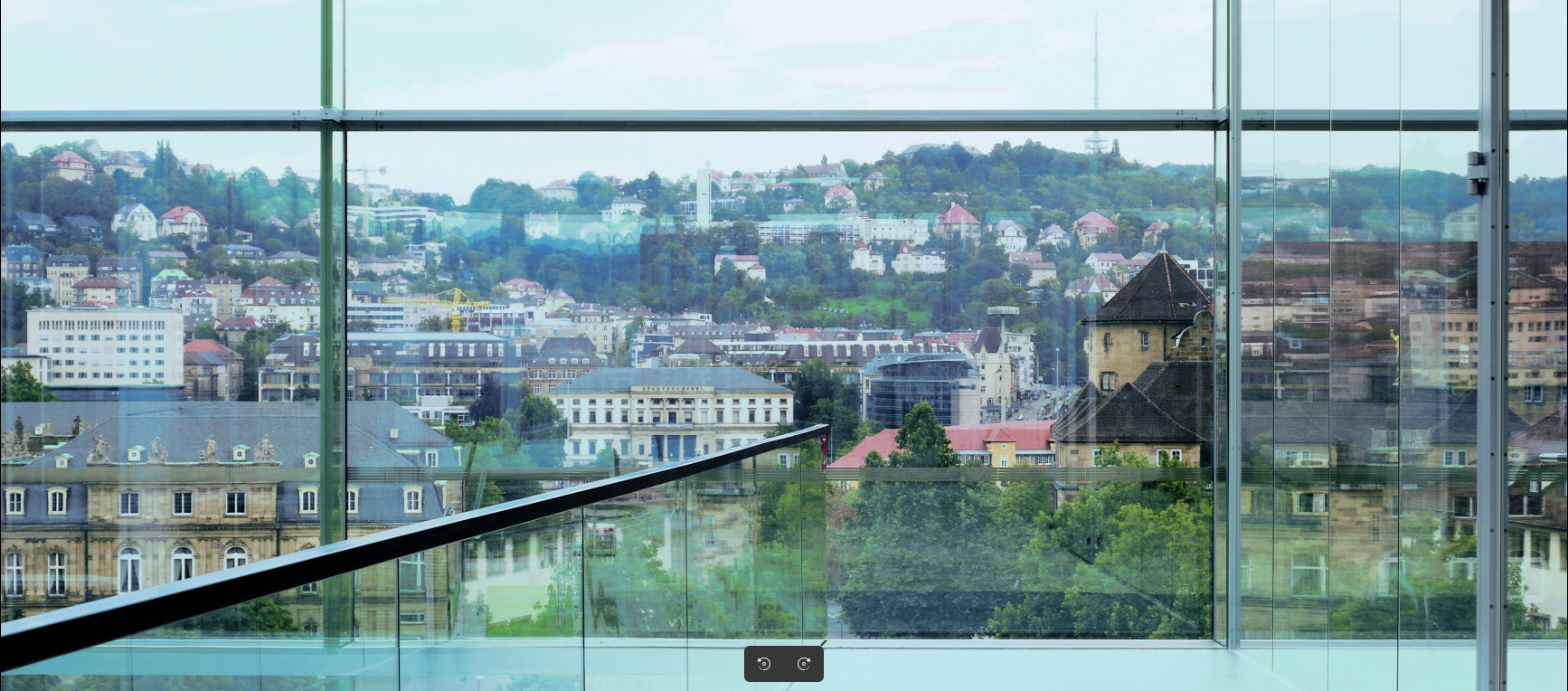
Looking ahead, Kunstmuseum Stuttgart is undergoing the largest modernization in its history. After more than two decades of continuous operation, the museum closed its doors in April 2026 for a comprehensive renovation, bringing its entire building technology and hazard detection systems up to current standards by early 2027.
The overhaul was unavoidable: the museum's aging infrastructure could no longer keep pace with modern security and technical standards for exhibition operations. That the museum was already prepared for this next step was demonstrated by its earlier, successful exhibit protection project with Isarsoft Perception. For the modernized museum, AI-powered video analytics is set to remain a key digital cornerstone helping the institution stay securely positioned for rising visitor numbers over the long term.
More about Kunstmuseum Stuttgart
Kunstmuseum Stuttgart is a living space for cultural exchange — open and transparent for everyone, and dedicated to fostering creativity and aesthetic experience. The museum's goal is to remain open and accessible to all, now and in the future.
Contact: Kunstmuseum Stuttgart
More about Isarsoft
Based in Munich, Isarsoft has built its reputation as a reliable partner in video analytics since 2019. Its mission: to unlock the potential of existing security camera systems using artificial intelligence.
Known for reliability, flexibility, user-friendliness, and versatile integration options, Isarsoft helps organizations optimize operational processes, increase safety, and strengthen customer satisfaction. Starting with people counting, its portfolio today spans more than 10 use cases, including queue management, object detection, path analysis, demographics, and more. For Isarsoft, every camera counts — in retail, at airports, in public transit, in urban planning, in logistics, and in cultural institutions.
Contact: Isarsoft
Images courtesy of Kunstmuseum Stuttgart.
Download the Case Study with Kunstmuseum Stuttgart
Explore More Publications

Monitoring Occupancy and Seat Availability in Public Transportation
Passenger counts tell operators how many people are on board, not where the remaining capacity is or what kind it is. We look at how seat-level and multifunctional-area occupancy monitoring gives transport operators that missing data.
.png)
On-Camera People Counting & Video Analytics with Isarsoft Perception Axis App
Isarsoft Perception now runs directly on the latest Axis cameras, eliminating the need for additional edge servers. Discover how on-camera analytics is transforming onboard vehicle deployment and opening the door to use cases previously limited by budget or space constraints.

Tackling Overcrowding with Video Analytics for Public Transport
This article explains how overcrowding occurs, highlights the negative consequences of it in public transportation, points out the options either for prevention or measures against overcrowding, and addresses how Isarsoft Perception can be a smart solution.
.png)
Optimizing Exhibit Security: Why Museums choose Video Analytics for Artwork Protection
Modern artwork protection is shifting from reactive, physical barriers to proactive, AI-driven protection. By leveraging existing camera infrastructure with real-time video analytics, museums can detect unauthorized proximity, touching attempts, and suspicious behavior reliably and invisible for the visitor.
.avif)
Museum People Counting: Unlocking the Power of Smart Visitor Analytics
How do top museums manage crowds and optimize exhibits in real time? With museum people counting systems that deliver precise visitor data and actionable insights.
.avif)
The Role of AI Video Analytics in Enhancing Museum Security
In recent years, museums around the world have faced a surge in security breaches and activism cases targeting valuable artworks. It underscores the vulnerabilities of traditional security measures. This is where AI video analytics comes into play to revolutionize museum security. In this blog post, we will explore how AI video analytics is transforming the landscape of artwork protection in museums, and we will offer a glimpse into the future of museum security.